
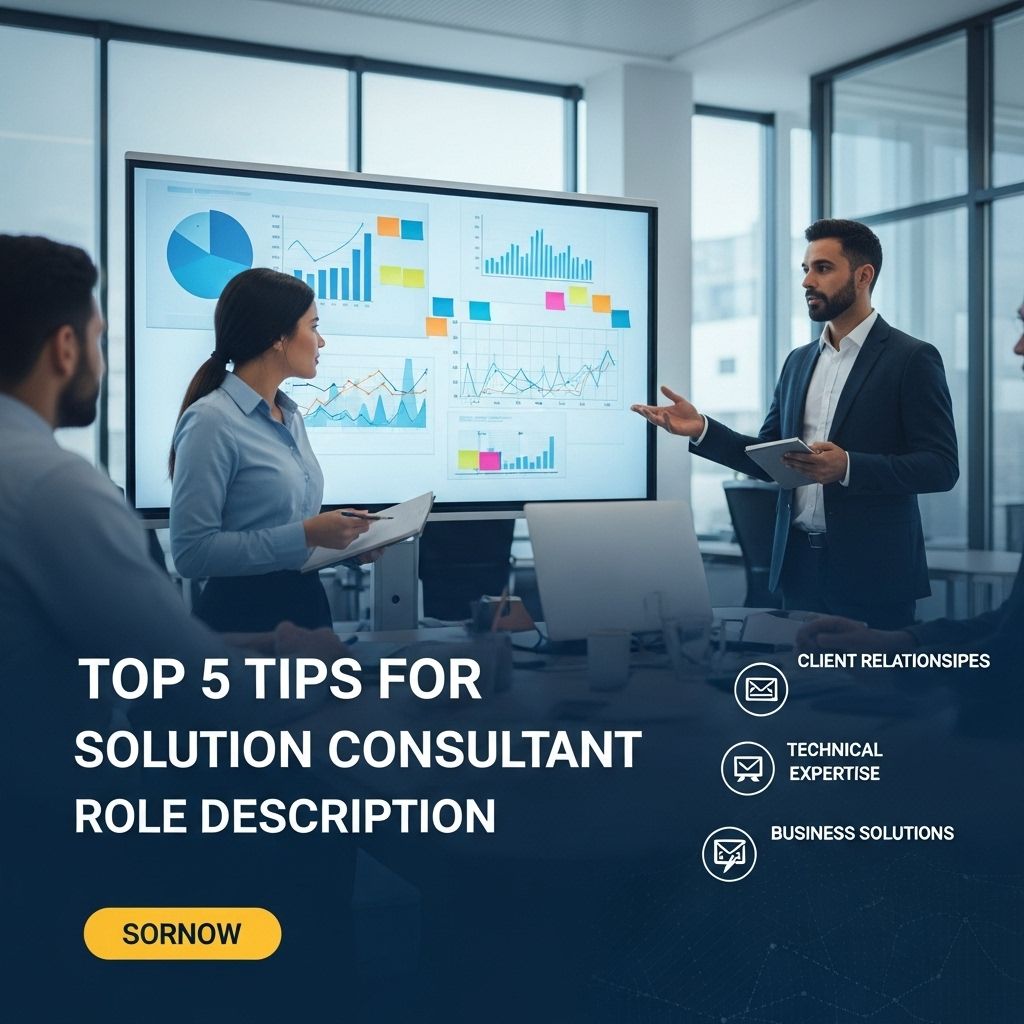

In today’s competitive business landscape, the demand for solution consultants has surged as organizations strive to bridge the gap between complex technologies and the needs of their clients. A solution consultant plays a crucial role in understanding client requirements, tailoring solutions, and ensuring successful implementation of technology solutions. In this article, we will explore essential tips for excelling in a solution consultant role, which can ultimately lead to enhanced client satisfaction and successful projects.
Understanding the Solution Consultant Role
A solution consultant acts as a liaison between clients and technology providers. Their primary responsibility is to analyze client needs, propose suitable solutions, and facilitate the implementation process. This requires a deep understanding of both the technology being offered and the specific challenges faced by the clients. Below are some key responsibilities typically associated with this role:
- Conducting needs assessments to identify client requirements
- Designing solutions that align with client objectives
- Collaborating with technical teams to implement solutions
- Providing training and support to clients post-implementation
- Gathering feedback to refine solutions
Tip 1: Master the Art of Communication
Effective communication is paramount in the role of a solution consultant. You must convey complex technical information in a way that is easily understood by non-technical stakeholders. This involves not only speaking clearly but also listening actively to client concerns and feedback.
Strategies for Effective Communication:
- Know Your Audience: Tailor your communication style based on the audience’s familiarity with technology.
- Use Visual Aids: Diagrams, flowcharts, and presentations can help illustrate complex concepts.
- Encourage Questions: Create a comfortable environment for clients to ask questions and express concerns.
Tip 2: Develop Strong Analytical Skills
The ability to analyze client needs and challenges is essential for a solution consultant. You will often need to identify the root causes of problems and propose relevant solutions. Strong analytical skills will also enable you to evaluate different technologies and determine the best fit for your clients.
Key Analytical Skills to Cultivate:
- Critical thinking
- Data analysis
- Problem-solving
Tip 3: Stay Updated on Industry Trends
The technology landscape is constantly evolving, and staying updated on the latest industry trends is crucial. This knowledge will enable you to provide clients with cutting-edge solutions and solidify your status as a trusted advisor.
Ways to Keep Abreast of Industry Developments:
- Follow Tech News Websites: Regularly read reputable tech news sources to stay informed about new technologies and trends.
- Attend Conferences and Webinars: Participate in industry events to network with peers and learn about emerging technologies.
- Join Professional Associations: Engaging with organizations related to your field can provide valuable insights and resources.
Tip 4: Build Strong Relationships with Clients
Building strong relationships with clients is vital for the success of a solution consultant. This not only fosters trust but also encourages clients to communicate openly about their needs and challenges. Establishing rapport can lead to long-term partnerships and repeat business.
Strategies for Relationship Building:
- Be transparent about processes and challenges.
- Follow up regularly to check on progress and satisfaction.
- Provide value through insights and recommendations, even when not directly related to a project.
Tip 5: Hone Your Technical Skills
While solution consultants need not be the most technical individuals in an organization, having a solid understanding of the technology involved is critical. This allows you to provide accurate information to clients and work effectively with technical teams.
Technical Skills to Consider Mastering:
| Skill | Description |
|---|---|
| Cloud Computing | Understanding different cloud platforms and their applications. |
| Data Analytics | Ability to interpret data and provide actionable insights. |
| Software Development Life Cycle (SDLC) | Familiarity with various methodologies and processes involved in software development. |
| Integration Technologies | Knowledge of how different systems can be integrated for seamless operations. |
Conclusion
Excelling as a solution consultant requires a mix of strong communication, analytical skills, a commitment to staying updated on industry trends, relationship-building capabilities, and technical proficiency. By focusing on these areas, you can position yourself as a valuable resource for your clients and contribute to the successful deployment of technology solutions. Embrace the journey of continuous learning and adaptation, and you’ll find great satisfaction in helping organizations navigate their technological challenges.
FAQ
What is the primary role of a Solution Consultant?
The primary role of a Solution Consultant is to analyze client needs and provide tailored solutions that enhance business processes and drive efficiency.
What skills are essential for a successful Solution Consultant?
Essential skills for a successful Solution Consultant include strong analytical abilities, effective communication, project management, and a deep understanding of the industry and technology.
How does a Solution Consultant collaborate with clients?
A Solution Consultant collaborates with clients by engaging in discussions to gather requirements, presenting solutions, and providing ongoing support throughout the implementation process.
What industries commonly employ Solution Consultants?
Solution Consultants are commonly employed in industries such as technology, finance, healthcare, and any sector that requires complex software solutions tailored to specific business needs.
What educational background is typically required for a Solution Consultant?
A typical educational background for a Solution Consultant includes a degree in business, information technology, or a related field, along with relevant certifications and experience in consulting or sales.