In today’s competitive tech landscape, staying relevant and ensuring your skills align with industry standards is paramount. Role-based certifications, particularly from trusted names like Microsoft, provide professionals with the credentials needed to stand out in their respective fields. These certifications not only validate your expertise but also enhance your career prospects by equipping you with the latest skills demanded by employers.
Understanding Role-Based Certifications
Role-based certifications are specifically designed to validate skills and knowledge pertinent to a specific job role within the tech industry. Unlike traditional certifications that cover broad topics, role-based certifications focus deeply on particular functions, allowing professionals to demonstrate their proficiency in a targeted area. The benefits of these certifications include:
- Targeted skills development for specific roles.
- Increased employability and career advancement opportunities.
- Enhanced understanding of Microsoft technologies relevant to your job.
Types of Microsoft Role-Based Certifications
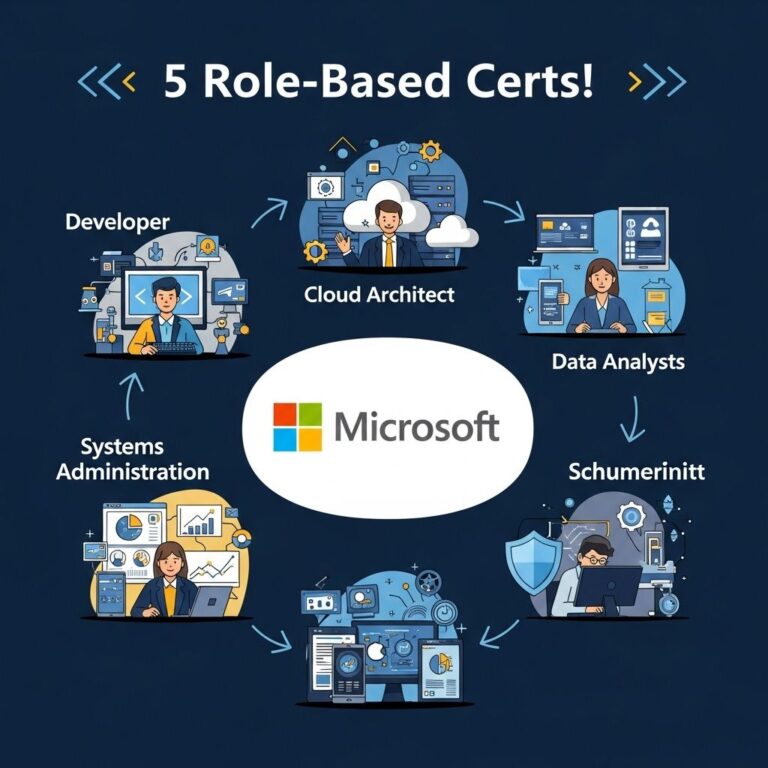
Microsoft offers a range of role-based certifications, each tailored to meet the needs of various job positions. Below are some of the most prominent certifications available:
1. Microsoft Certified: Azure Developer Associate
This certification validates your skills in developing applications and services on Microsoft Azure. It encompasses various aspects, including:
- Implementing Azure compute solutions.
- Developing for Azure storage.
- Deploying Azure security features.
2. Microsoft Certified: Azure Solutions Architect Expert
This expert-level certification is for professionals who design solutions that run on Azure. Key skills recognized by this certification include:
- Designing infrastructure and application solutions.
- Implementing security and identity management.
- Monitoring and optimizing Azure solutions.
3. Microsoft Certified: Data Analyst Associate
The Data Analyst Associate certification is aimed at professionals who leverage data analysis tools to help drive business decisions. Competencies include:
- Preparing data for analysis.
- Modeling data.
- Visualizing data insights with reports and dashboards.
4. Microsoft Certified: Security, Compliance, and Identity Fundamentals
This foundational certification is ideal for those looking to understand the basic concepts of security, compliance, and identity (SCI) across cloud-based services. Key areas include:
- Understanding security concepts and principles.
- Identifying compliance tools and capabilities.
- Understanding identity capabilities.
The Benefits of Pursuing Microsoft Certifications
Investing time and resources into obtaining Microsoft certifications can yield significant returns in your career. Here are some compelling reasons to consider:
1. Enhanced Career Opportunities
With the tech industry evolving rapidly, certifications can make you more attractive to prospective employers. Companies often prefer candidates who have validated their skills through recognized credentials.
2. Increased Salary Potential
According to various industry surveys, certified professionals often earn higher salaries than their non-certified counterparts. This can be attributed to the specialized expertise that certifications signify.
3. Access to Exclusive Resources
Microsoft provides certified professionals with access to exclusive resources, networking opportunities, and ongoing training material to help you stay current with the latest technologies.
How to Prepare for Microsoft Role-Based Certifications
Preparation is key to success in obtaining any certification. Here are steps to effectively prepare for your Microsoft certification exams:
1. Understand the Exam Structure
It’s crucial to familiarize yourself with the exam format, including the types of questions asked and the required passing score. Microsoft’s official certification page provides detailed information about each exam.
2. Utilize Microsoft Learning Paths
Microsoft offers comprehensive learning paths tailored to each certification. These learning paths include:
- Online training modules.
- Hands-on labs.
- Learning resources and documentation.
3. Join Study Groups
Engaging with peers through study groups can enhance your learning experience. Sharing knowledge and resources can provide additional insights and clarify complex topics.
4. Take Practice Exams
Practice exams can help gauge your readiness and familiarize yourself with the exam pattern. There are numerous online platforms offering practice tests that mimic the actual exam environment.
Staying Updated with Microsoft Technologies
The tech landscape is continuously evolving, and so are Microsoft products and services. Here are important ways to stay updated:
1. Follow Microsoft’s Official Blogs
Microsoft publishes regular updates on product releases, features, and best practices. Staying informed through their official blogs ensures you are aware of the latest trends.
2. Attend Microsoft Events
Participating in Microsoft-hosted events, such as Microsoft Ignite and Build, provides valuable insights into upcoming technologies, networking opportunities, and hands-on experience with new tools.
3. Engage with Community Forums
Online forums and communities (such as Microsoft Tech Community) are great for engaging with other professionals, sharing experiences, and seeking guidance on certification topics.
Conclusion
Pursuing role-based certifications from Microsoft can significantly enrich your professional journey. With a focus on specific job roles, these certifications not only validate your skills but also enhance your marketability in a competitive field. By investing in your continuous learning and leveraging the resources available, you position yourself effectively for career advancement and future opportunities in the tech industry.
FAQ
What are role-based certifications from Microsoft?
Role-based certifications from Microsoft validate your skills in specific job roles, such as Azure Administrator, Data Scientist, or Microsoft 365 Administrator. They focus on practical, real-world scenarios to ensure you are equipped for your job.
How can role-based certifications benefit my career?
Obtaining role-based certifications can enhance your career prospects by demonstrating your expertise to potential employers, increasing your earning potential, and providing you with a competitive edge in the job market.
What is the difference between role-based and traditional certifications?
Role-based certifications are tailored to specific job functions, focusing on the skills required for those roles, while traditional certifications may cover broader topics without the focus on practical application.
How do I prepare for a Microsoft role-based certification exam?
To prepare for a Microsoft role-based certification exam, you can utilize official Microsoft learning paths, online courses, practice tests, and hands-on labs to build your skills and knowledge.
Are there prerequisites for Microsoft role-based certifications?
While there are no strict prerequisites for most Microsoft role-based certifications, having foundational knowledge of the relevant technology and prior experience in the field can be beneficial.
How long is a Microsoft role-based certification valid?
Microsoft role-based certifications do not expire, but it is recommended to stay updated with the latest technologies and renew your skills regularly to remain competitive in the industry.