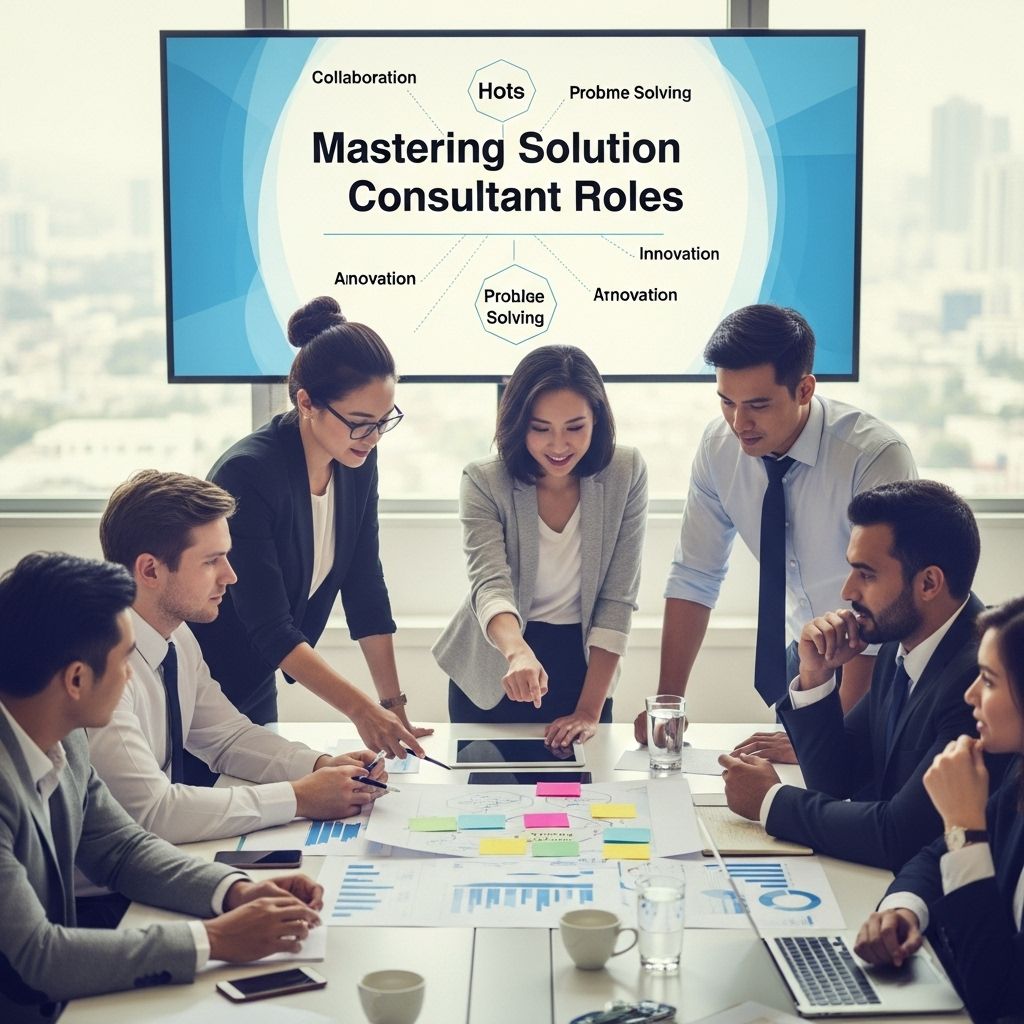

The role of a Solution Consultant is increasingly vital in today’s fast-paced business environment, especially as organizations seek to harness technology and improve their processes. These professionals act as a bridge between the client and the solution provider, ensuring that specific needs are addressed while also aligning with the overall business objectives. Mastering this role involves a deep understanding of various responsibilities, effective communication skills, and a strategic mindset. In this article, we will explore the key responsibilities of a Solution Consultant, the skills necessary for success, and strategies for professional development.
Understanding the Role of a Solution Consultant
A Solution Consultant plays a critical part in the sales process, helping clients understand how a particular solution can meet their needs. They work closely with sales teams, product managers, and clients to provide tailored solutions. The role can vary significantly across industries and organizations, but the core responsibilities typically include:
- Assessing client needs and requirements
- Demonstrating products or solutions
- Providing pre-sales support
- Creating and presenting proposals
- Collaborating with technical teams for implementation
Key Responsibilities of a Solution Consultant
1. Client Needs Assessment
The first step in the solution consultant’s journey is understanding the client’s specific needs. This includes:
- Conducting interviews and workshops with stakeholders
- Gathering and analyzing data to inform solution development
- Identifying gaps in current processes and systems
2. Solution Demonstration
A Solution Consultant must be proficient in demonstrating how a product works. This involves:
- Creating demos tailored to the client’s requirements
- Highlighting key features and benefits relevant to the client
- Addressing any questions or concerns during the demonstration
3. Proposal Development
Once the client’s needs are understood, the Solution Consultant must develop a comprehensive proposal. This typically includes:
- Detailed solution descriptions
- Implementation timelines
- Cost estimates
- Support and maintenance options
4. Pre-sales Support
Solution Consultants often assist sales teams in closing deals. They provide valuable insights and technical expertise that can help sway client decisions. Key activities include:
- Participating in sales meetings
- Providing competitive analysis
- Offering strategic advice on client engagements
5. Collaboration with Technical Teams
After a solution is sold, the Solution Consultant ensures that implementation runs smoothly. Collaboration with technical teams is crucial during this phase, which may involve:
- Translating client requirements into technical specifications
- Participating in project kickoff meetings
- Monitoring progress and addressing issues as they arise
Essential Skills for Solution Consultants
To excel as a Solution Consultant, one must possess a variety of skills that span both technical and soft skill areas:
1. Technical Expertise
A strong understanding of the products and technologies being offered is essential. This includes:
- Deep knowledge of software or systems
- Staying updated on industry trends
- Understanding integration capabilities with other systems
2. Communication Skills
Effective communication is crucial in this role. A successful Solution Consultant should:
- Clearly articulate complex concepts
- Listen actively to client needs
- Tailor messaging for different audiences
3. Problem-Solving Skills
This role frequently requires the ability to think critically and solve problems on the fly:
- Identifying innovative solutions to client challenges
- Utilizing analytical skills to assess issues
- Developing creative proposals that meet client needs
4. Relationship Building
Building strong relationships with clients and team members is vital for success. This entails:
- Establishing trust and credibility
- Engaging clients throughout the sales and implementation process
- Being responsive to client feedback and inquiries
5. Project Management
While not always the primary role, Solution Consultants often engage in project management tasks. This includes:
- Coordinating with various stakeholders
- Ensuring project milestones are met
- Managing time effectively
Strategies for Mastering the Solution Consultant Role
Continuous growth and development are vital for anyone looking to excel as a Solution Consultant. Here are some strategies to consider:
1. Pursue Relevant Certifications
Acquiring certifications that pertain to your industry or technology can enhance your credibility and knowledge base. Some popular certifications include:
| Certification | Provider | Details |
|---|---|---|
| Certified Solutions Architect | AWS | Focus on designing systems on AWS |
| Microsoft Certified: Azure Solutions Architect | Microsoft | Expert-level certification for Azure |
| Salesforce Certified Architect | Salesforce | Specializes in Salesforce solutions |
2. Develop Soft Skills
Soft skills are often what differentiate good consultants from great ones. Focus on enhancing skills like:
- Negotiation
- Active listening
- Empathy
3. Networking
Building a strong professional network can lead to new opportunities and collaborations. Consider:
- Joining industry associations
- Attending conferences and seminars
- Engaging in online forums and communities
4. Seek Mentorship
The guidance of an experienced mentor can provide valuable insights and advice. Find mentors who:
- Have a wealth of experience in your field
- Can offer constructive feedback on your performance
- Can help you navigate career advancements
5. Continuous Learning
The tech landscape is ever-evolving. Stay ahead by:
- Participating in webinars
- Reading industry publications
- Engaging in online courses
Conclusion
Mastering the Solution Consultant role is not just about understanding technical products; it’s about integrating that knowledge with effective communication, problem-solving abilities, and relationship building. By focusing on the key responsibilities outlined, honing essential skills, and continually seeking growth opportunities, you can excel in this dynamic and fulfilling career path. The impact you can have on both clients and your organization makes this role an exciting and rewarding choice for anyone looking to thrive in the technology sector.
FAQ
What are the key responsibilities of a solution consultant?
A solution consultant is responsible for understanding client needs, designing tailored solutions, conducting product demonstrations, and providing ongoing support throughout the implementation process.
What skills are essential for a successful solution consultant?
Essential skills include strong communication, problem-solving, technical expertise, project management, and a deep understanding of the industry and client needs.
How can I improve my expertise as a solution consultant?
To improve, focus on continuous learning through training, certifications, and staying updated with industry trends. Networking with other professionals can also provide valuable insights.
What industries commonly employ solution consultants?
Solution consultants are commonly employed in technology, finance, healthcare, and any industry that requires customized software or solutions.
How does a solution consultant differ from a sales consultant?
While a sales consultant focuses primarily on selling products, a solution consultant emphasizes understanding client needs and providing tailored solutions that address specific problems.
What are some common challenges faced by solution consultants?
Common challenges include managing client expectations, staying updated with rapidly changing technologies, and balancing multiple projects and deadlines.