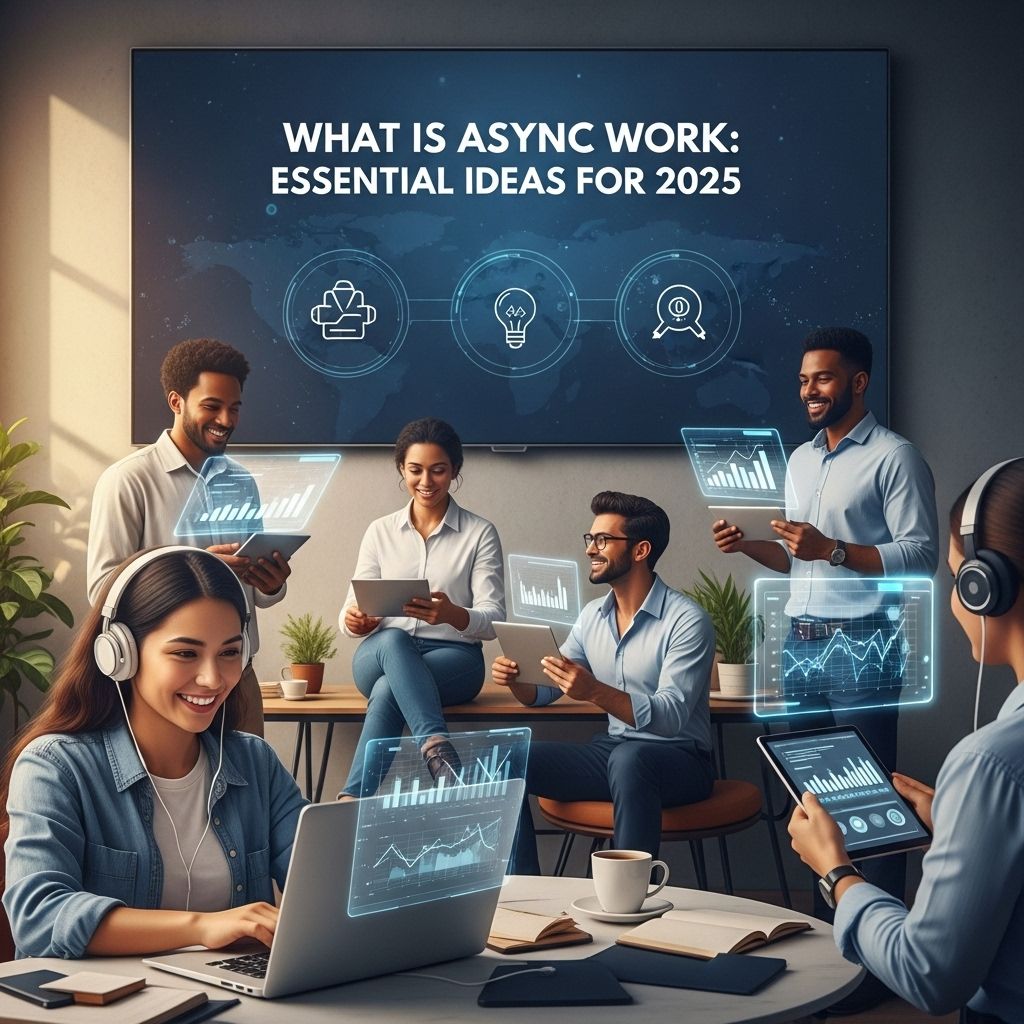

As the pace of technological advancement accelerates, the landscape of work continues to shift dramatically. The rise of remote collaboration tools, the increasing prominence of artificial intelligence, and the evolution of project management methodologies have all contributed to the growing importance of asynchronous work. This article explores the essential concepts and future implications of asynchronous work as we move toward 2025.
Understanding Asynchronous Work
Asynchronous work allows team members to complete tasks and communicate without needing to connect in real-time. This approach offers several advantages, particularly for teams spread across different time zones. Unlike traditional synchronous communication, where all participants must be present at the same time, asynchronous methods enable flexibility and can enhance productivity.
Key Characteristics of Asynchronous Work
- Time Flexibility: Employees can work at their own pace, leading to improved focus and efficiency.
- Reduced Meeting Fatigue: Teams can avoid long, unproductive meetings by relying on written communications instead.
- Increased Focus: Individuals have the opportunity to manage their time better, which often leads to higher quality work.
- Global Collaboration: Team members can contribute regardless of their location or time zone.
Tools and Technologies Enhancing Asynchronous Work
The successful implementation of asynchronous work heavily depends on the tools that facilitate communication and collaboration. Here are some essential tools that are shaping the asynchronous workspace:
Collaboration Platforms
| Tool | Features | Best For |
|---|---|---|
| Slack | Channels, direct messaging, file sharing | Team communication and casual updates |
| Trello | Task boards, due dates, integrations | Project management |
| Asana | Task assignments, timelines, project tracking | Comprehensive project management |
| Notion | Documentation, databases, team wikis | Knowledge management |
Document Sharing and Storage
Asynchronous work often involves sharing documents and data. The following platforms are instrumental in enabling smoother workflows:
- Google Drive: Cloud storage and collaboration on documents and spreadsheets.
- Dropbox: File sharing and synchronization across devices.
- Microsoft OneDrive: Integrates with Microsoft Office for easy document collaboration.
Challenges of Asynchronous Work
While asynchronous work presents numerous benefits, it also comes with its own set of challenges that organizations must address:
Potential Pitfalls
- Communication Gaps: The lack of immediate feedback can lead to misunderstandings or delays.
- Accountability: Without real-time oversight, it can be challenging to track progress on tasks.
- Isolation: Team members may feel disconnected from their colleagues due to reduced face-to-face interactions.
Best Practices for Implementing Asynchronous Work
To maximize the effectiveness of asynchronous work, organizations should consider the following best practices:
1. Establish Clear Communication Protocols
Define how and when to communicate asynchronously. Set guidelines for response times and preferred channels for different types of communication.
2. Utilize Project Management Tools
Implement tools that help teams track progress and deadlines. Use visual boards to give everyone a clear understanding of ongoing projects.
3. Encourage Regular Check-Ins
Even in asynchronous environments, maintaining a connection is vital. Schedule regular updates or brief virtual catch-ups to foster team cohesion.
4. Provide Training and Support
Equip your team with the skills they need to thrive in an asynchronous environment. Offer training on using collaboration tools and best practices for effective communication.
The Future of Asynchronous Work: Trends to Watch
As we look ahead to 2025, several trends are set to shape the future of asynchronous work:
Integration of AI and Automation
AI tools will streamline workflows, automate repetitive tasks, and improve communication, allowing teams to focus on higher-value activities.
Greater Emphasis on Employee Well-being
Organizations will prioritize flexibility and work-life balance, recognizing the importance of mental health in remote work settings.
Expanded Global Talent Pools
Companies will increasingly tap into a global workforce, breaking down geographical barriers and allowing access to diverse skill sets.
Conclusion
Asynchronous work is not just a trend but a fundamental shift in how teams collaborate and communicate. By embracing the principles and tools associated with this work style, organizations can enhance productivity, improve employee satisfaction, and foster a more inclusive and flexible work environment. As we move towards 2025, understanding and adapting to asynchronous work will be crucial for success in the ever-evolving landscape of modern work.
FAQ
What is async work?
Async work refers to a working model where team members can complete tasks independently without needing to be online or available at the same time, allowing for greater flexibility and efficiency.
What are the benefits of async work?
Benefits of async work include increased productivity, flexibility in work hours, reduced burnout, and the ability to collaborate across different time zones.
How can teams effectively implement async work?
Teams can implement async work by using clear communication tools, setting defined expectations, utilizing project management software, and creating a culture that values autonomy and accountability.
What tools are best for async work?
Popular tools for async work include Slack, Trello, Asana, Notion, and Zoom, which facilitate communication, project tracking, and collaboration without the need for simultaneous engagement.
How will async work evolve by 2025?
By 2025, async work is expected to evolve with advancements in technology, better integration of AI tools, and a stronger emphasis on work-life balance, leading to more organizations adopting this flexible approach.
What challenges might arise with async work?
Challenges of async work can include miscommunication, feelings of isolation among team members, and difficulties in maintaining team cohesion without regular face-to-face interactions.